The scope names which of these are in the build. Credentials for channels, messages, SMS, card payment, and the identity notice stay in the hotel’s name.
Reservations
A stay keeps its number, dates, nights, room type, rate plan, source, and notes. The source can be the website, the phone, the desk, or a channel. The desk places the guest in a vacant room of that type, can move them, and can extend the dates. Check-out marks the stay closed and opens a housekeeping task. Cancel removes it from what can be sold.
Rooms, rates, and the calendar
Room types, numbered rooms, amenities, and the board plans the hotel writes. Prices can be set by night and by how many guests, including a price for one date. The availability table shows what is free. A room out of order is left out of what can be sold. More than one property can sit under the same hotel, each with its own rooms, check-in time, and channels.
Housekeeping
A departure, a room change, or a clean request becomes a task: waiting, in progress, or done. Housekeeping signs in on its own screen. The desk sees the room as ready for the next arrival when the task is finished.
Guests and vehicles
Each stay holds the people on it: name, phone, email, nationality, and identity. A later stay can be found from that person. Plates are stored with the reservation and can be looked up by plate, guest, or room. When the property’s official identity notice is switched on, a guest with an identity number is queued for that filing, using the property’s own credentials.
Channel manager
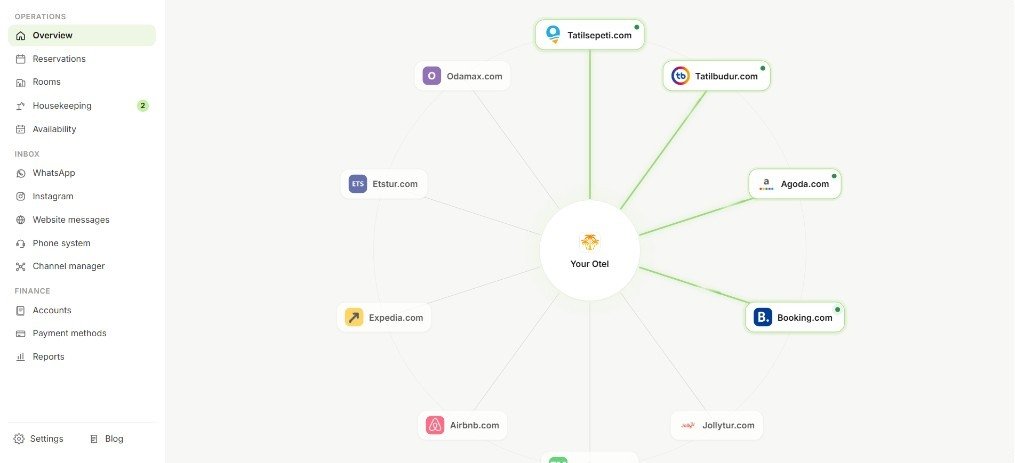
Each property connects the channels it sells: Booking.com, Expedia, Airbnb, Agoda, Tatilsepeti, Tatilbudur, Jolly, ETS, Enuygun, and Odamax. Room types map to the listing. Each room type can publish an iCal, and a channel calendar can be pasted back in so busy dates block the desk.
Messages, calls, and SMS
WhatsApp and Instagram use the hotel’s Meta Cloud API credentials. Messages from the website form land in the same inbox, and the desk can reply. Calls can be logged against the day. A PBX address and key, when the hotel has one, are stored in settings. SMS goes through the hotel’s own account — Netgsm, İleti Merkezi, Mutlucell, or Vatan SMS — for a new reservation, a confirmation, a cancellation, arrival day, and departure day. The hotel writes the text.
Accounts and reports
Guest balances, sales invoices, payments, refunds, and room or food-and-beverage extras. Cash accounts sit beside them. Card payment can run through the hotel’s PayTR merchant account when that is in the scope. Reports cover a day, a month, thirty days, a year, or a chosen range: occupancy against sellable rooms, arrivals, departures, new reservations, guest nights, and the split by room type and board.
The site the guest uses
Rooms, a reservation request, a gallery, a blog, and pages. The hotel turns the sections on. Languages and the currencies shown follow what the hotel keeps, including a price converted from the rate on file. The public site and the desk read the same rooms and the same dates.